The Olive Peace Initiative
The Sacred Relocation
The relocation of the Dome of the Rock is an unprecedented logistical and spiritual undertaking. Carefully preserving the sacred architecture and meticulously dismantling and transporting the sanctuary presents massive engineering challenges. However, ensuring the safe transition of every historic stone to its new foundation is our absolute priority.
This historic movement yields profound benefits for all. For Muslims, it establishes an eternal, sovereign sanctuary free from conflict and occupation. For Jews, it peacefully clears the sacred Mount for the reconstruction of the Third Temple of Solomon. For the rest of the world, it definitively resolves one of history's most intractable territorial disputes, ushering in a golden era of global peace.
A Heritage of Cultivation
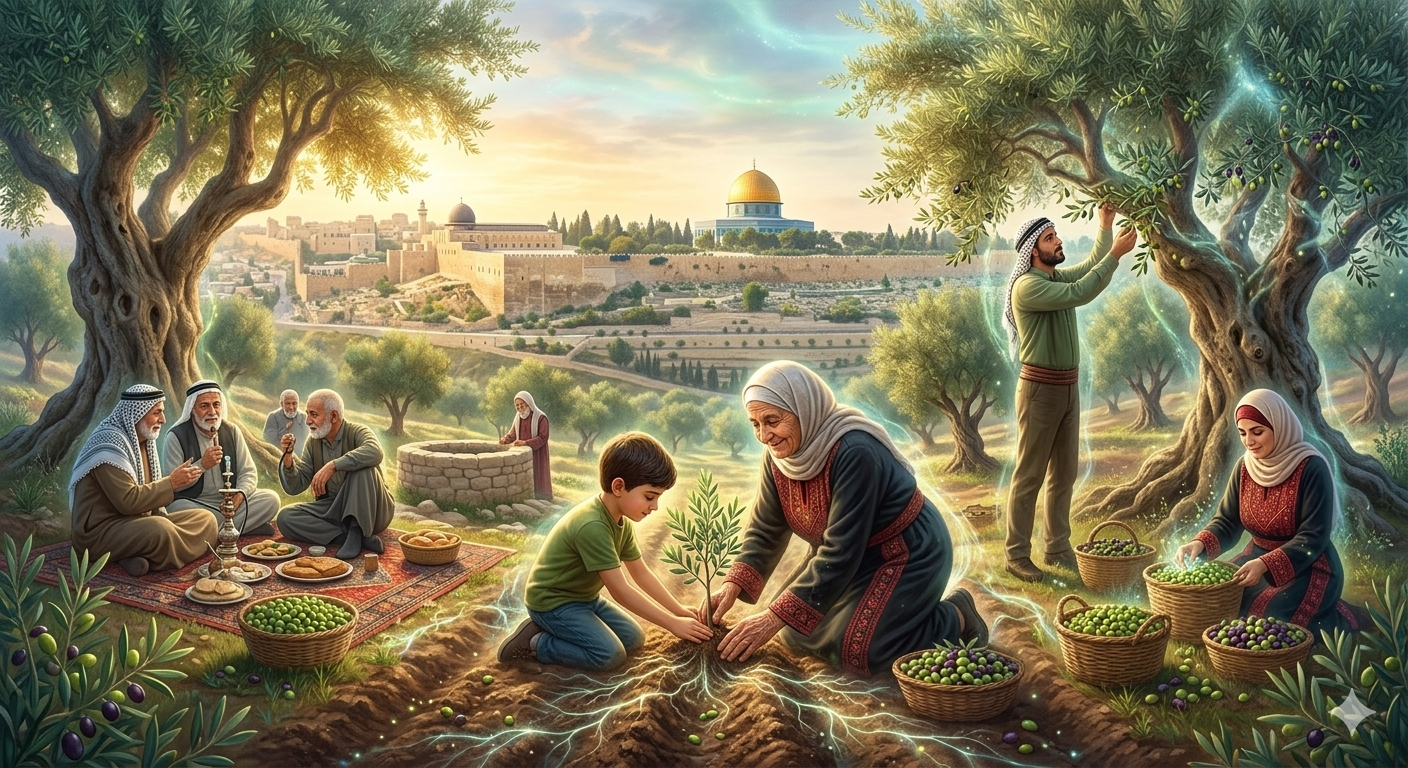
Agriculture is deeply woven into the heritage of the Palestinian people, who have masterfully cultivated olive trees for centuries. The Olive Peace Initiative honors this enduring legacy. By planting millions of new olive groves across the new territory, we are creating a tangible, self-reliant economy that provides immediate vocational training, sustainable agricultural exports, and a deep, rooted connection to the new sovereign soil.
Why The Richat Structure?
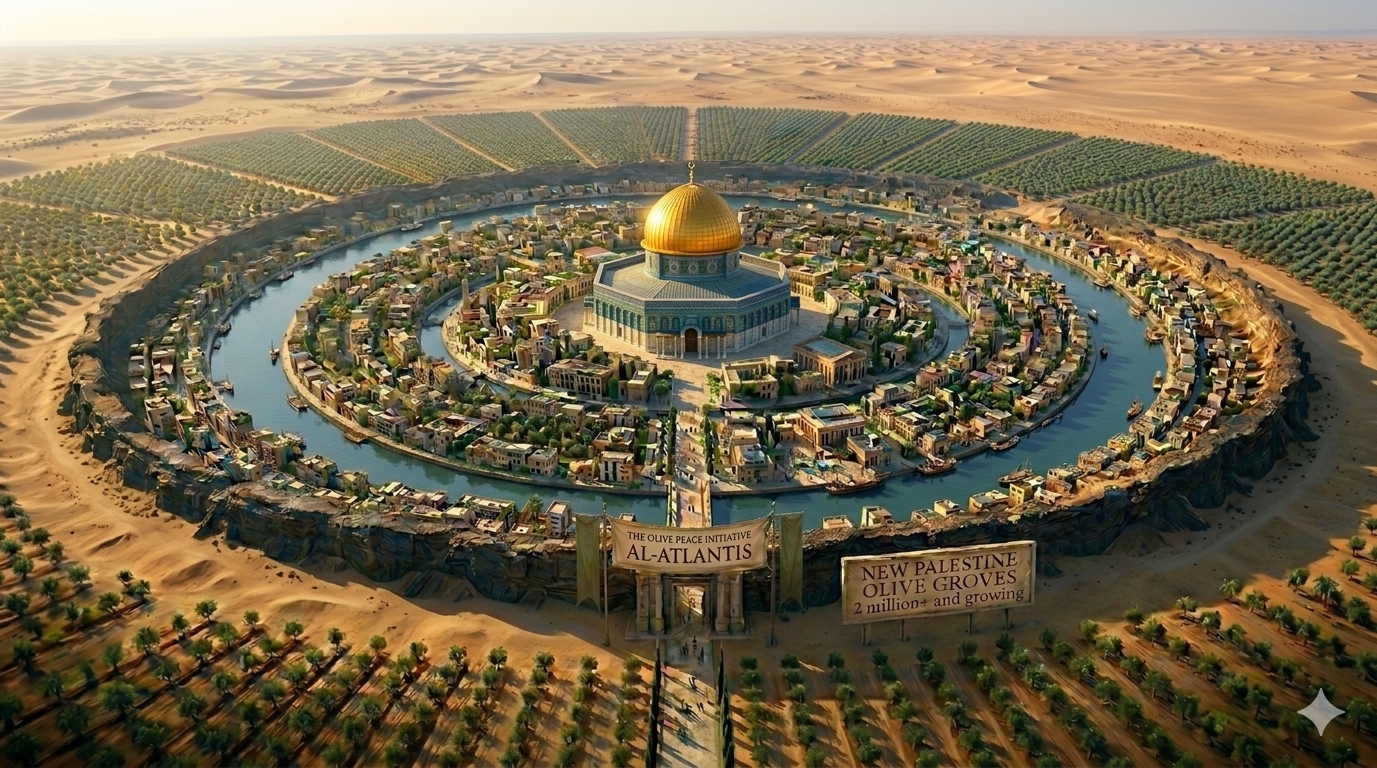
The "Eye of the Sahara" (Richat Structure) provides a vast, unoccupied expanse far removed from major conflict zones. It benefits from exceptional geopolitical stability, surrounded by welcoming neighbors: Mauritania, a peaceful majority-Muslim nation, and Morocco to the north, a historic safeguarder of peace and a dedicated advocate within the Al-Quds Committee.
Furthermore, a sanctuary as sacred as the Dome of the Rock requires a majestic setting. The Eye of the Sahara—theorized by many to be the true location of ancient Atlantis—provides a spectacular, awe-inspiring foundation. This location guarantees that the new sanctuary is equal in grandeur and spiritual weight to the ancient grounds where King Solomon built his original temple.